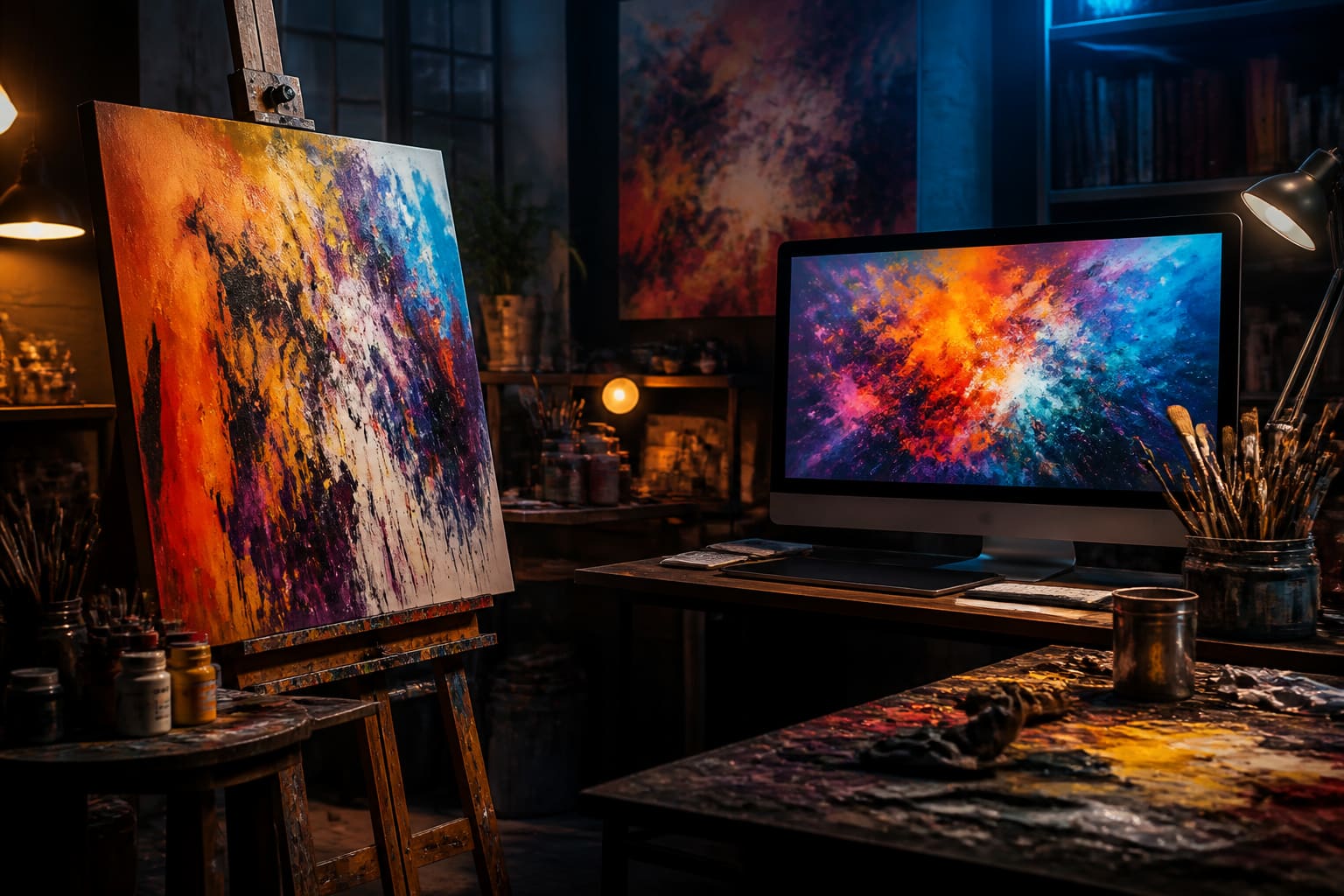
Generative image models can produce a magazine cover in seconds. They can also reproduce the brushstroke cadence of a living illustrator closely enough to end commissions. That tension — speed versus livelihood — has moved from Twitter threads to courtrooms, studio boardrooms and the text of EU regulation. The fight is no longer about whether AI art is “real” art. It is about permission, payment and the architecture of the internet we trained these systems on.
I spoke with illustrators in Bristol and Glasgow, lawyers specialising in IP, and product leads at two major model vendors. Nobody got everything they wanted. Artists want opt-in training and revenue sharing. Vendors want predictable legal ground to keep shipping. Platforms want liability shields. The compromise emerging in 2026 is messier than any press release admits — but it is starting to look like a framework rather than a free-for-all.
How we got here: scraping as default
Early text-to-image systems were built on large crawls: LAION and similar datasets aggregated billions of image-text pairs from the public web. Consent was implicit at best. Many images were copyrighted; some carried personal photos scraped from social profiles. Vendors argued transformative use — that training is intermediate copying akin to a human artist studying references. Rights holders argued the scale, commercial purpose and substitutive output crossed a line fair use never intended to cover.
UK law sits in an awkward middle. Text and data mining for research enjoyed a broad exception until rights holders could opt out via machine-readable signals. The Enterprise and Regulatory Reform Act landscape and subsequent consultations have not fully settled commercial TDM. Creators report confusion: does a robots.txt line protect them? Does an IPTC metadata tag? Courts may decide faster than Parliament clarifies.
The cases that reshaped the conversation
US federal cases against OpenAI, Stability AI and others produced mixed early rulings — some claims dismissed, others proceeding to discovery. The discovery phase mattered: internal emails about dataset curation and artist name prompts entered the public record. Vendors that once said “we cannot know what is in the training set” faced documents suggesting otherwise.
In the UK, Getty Images’ action against Stability AI remains a bellwether for whether training on copyrighted works accessed via licensing circumvention counts as infringement. The EU’s AI Act adds transparency obligations: general-purpose AI providers must publish summaries of training data and comply with copyright opt-outs recognised under Union law. That is not a ban on scraping — it is a compliance tax that favours large firms with legal teams.
“Copyright law was written for human creators copying by hand, not for machines ingesting the corpus of civilisation overnight. Legislatures are playing catch-up — and creators are paying the price in the meantime.”
— European Parliament briefing on AI and intellectual property, europa.eu
Licensing, opt-out and the new market for data
The industry response is a rush to licensed corpora. Shutterstock, Adobe Stock, news archives and game asset libraries sell training rights. Some illustrators join collective licensing pools — modelled loosely on music PROs — that pay micro-royalties when stylistically tagged outputs monetise. None of these schemes yet match the scale of pre-2023 scraping, but new flagship models increasingly advertise “fully licensed” training sets as a sales point.
Opt-out registries have proliferated: Spawning’s Do Not Train, IPTC Photo Metadata Standard extensions, and vendor-specific exclusion lists. Effectiveness varies. A registry only works if every downloader respects it — fine for compliant US and EU vendors, useless against rogue forks hosted offshore. Artists should treat opt-out as necessary, not sufficient.
What creators can do in 2026
Practical steps: register works with collecting societies where applicable; embed IPTC rights metadata; use registry opt-outs; monitor model release notes for licensed partners. For commercial commissions, contracts should specify whether clients may feed deliverables into generative tools — many agencies now include explicit AI clauses after portfolio leaks.
Education helps. Several UK art schools now teach “AI literacy” — not prompt engineering alone, but how diffusion models represent style as statistical clusters, and why that matters for moral rights arguments even where legal wins are uncertain.
Studios, games and the commercial middle ground
Game and film studios use generative tools for concept art, texture variants and localisation — under strict internal policies. AAA houses distinguish “AI-assisted” from “AI-generated” in credits. Union pressure in the US and UK writers’ and actors’ guilds has pushed transparency riders into contracts. The pattern: AI as accelerator for pre-production, not replacement for final assets without review.
Stock platforms split. Some ban purely AI uploads; others create separate AI categories with labelling requirements. Adobe’s Firefly route — train on licensed Adobe Stock and public domain — is the template incumbents prefer: defensible, boring, expensive to replicate.
Where policy is heading
Expect a two-tier market: enterprise models with audited provenance and consumer models with murkier lineage. The EU will enforce transparency; the UK will likely follow with lighter-touch guidance tied to the Intellectual Property Office’s ongoing AI consultations. US outcomes depend on appeals courts and possibly Congress — a federal TDM framework has bipartisan draft interest but no guaranteed passage.
None of this restores the pre-2022 status quo. The corpus is already baked into open-weight checkpoints circulating on torrents. Law shapes the next generation of training, not the last.
Verdict
Pros
- Licensed training and transparency rules gaining traction
- Opt-out registries and metadata standards improving
- Studios adopting clearer AI disclosure policies
Cons
- Legacy models trained on unlicensed crawls remain widely available
- UK TDM law still unsettled for commercial use
- Style mimicry hard to litigate even when it hurts livelihoods
Sources
- European Commission, “AI Act and copyright” — europa.eu
- UK Intellectual Property Office, “Artificial intelligence and IP” — gov.uk
- The Verge, “AI art and copyright litigation” — theverge.com