The wireless earbud market in 2026 is crowded enough to give you decision fatigue before you finish your first coffee. Every brand claims “best-in-class ANC”, “studio-quality sound” and “all-day comfort”. Most of those claims are marketing weather. This guide ignores the brochure and ranks buds we wore for at least a week each — on commutes, in gyms, on calls and during the quiet hour when you finally listen to an album instead of a playlist algorithm.
We grouped picks by how people actually buy: iPhone owners who want seamless handoff, Android users who refuse to subsidise Apple’s ecosystem, runners who sweat like they are being chased, frequent flyers who treat ANC as survival gear, and shoppers who want 80% of flagship performance at half the price. One pair will fit. Several might tempt you. That is the problem with a good category right now.
Best for iPhone: AirPods Pro 3
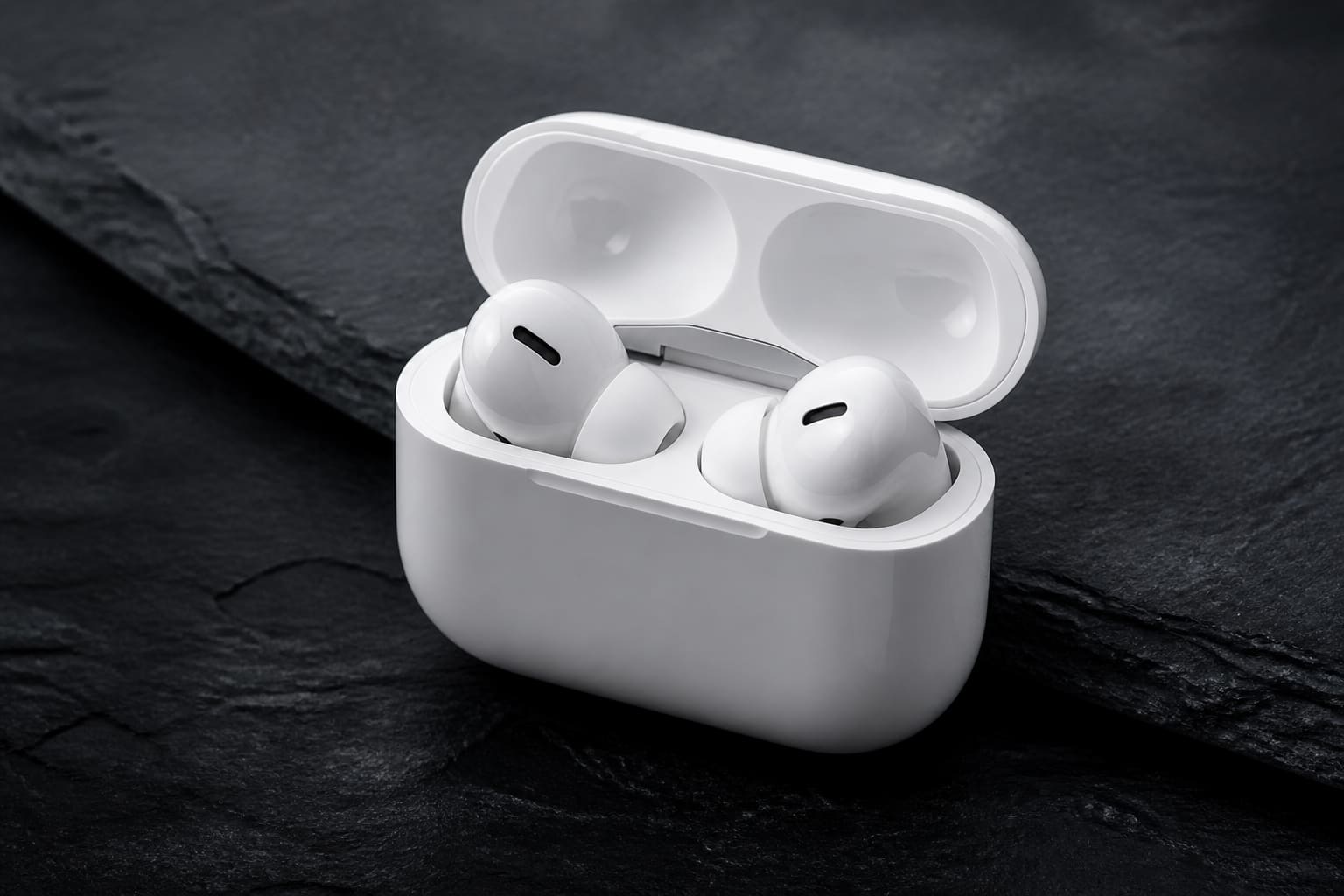
If your phone is an iPhone, the calculus is straightforward. AirPods Pro 3 offer the tightest integration — instant pairing, device switching, Find My, personalised spatial audio and Adaptive Transparency that actually helps on busy streets. ANC is now competitive with Sony and Bose rather than trailing by a carriage length. Our full review covers fit, wind noise and whether Pro 2 owners should upgrade.
The catch is the Apple tax: £249 for features Android cannot fully access, and no hi-res codec support for the stubborn audiophile. Within the walled garden, though, nothing else feels as frictionless. You will spend more time listening and less time digging through Bluetooth settings — which is worth money if you value sanity.

Best for Android: Sony WF-1000XM6
Sony’s sixth-generation XM buds remain the Android default for good reason. LDAC support, brutal low-frequency ANC, multipoint that actually sticks, and twenty-four hours of case-assisted battery life. The sound signature is slightly V-shaped out of the box — fun, not neutral — but the Headphones Connect app lets you flatten the curve if you prefer analytical listening.
The case is chunky. The price hovers around £279. Call quality improved over the XM5 but still loses to Apple in windy outdoor conditions. If you care about codec support, custom EQ and travel endurance, Sony wins. If you care about pocketability and video-call polish, look elsewhere.
“Earbuds are worn equipment, not shelf trophies — comfort and seal beat branding every time.”
— The Verge, reviewing true wireless earbuds for everyday use
Best for sport: Beats Powerbeats Pro 2
Ear hooks exist because physics exists. The Powerbeats Pro 2 stay locked during interval sprints, heavy bag sessions and the accidental burpee when your trainer has a sense of humour. IP67 rating, heart-rate sharing with compatible apps, and surprisingly balanced tuning once you disable the bass boost preset. They are larger than stem buds and the case is not pocket-friendly — treat them as gym kit, not office jewellery.
Battery hits nine hours per bud in our tests with ANC off. Transparency mode lets you hear traffic on canal-side runs without removing them. At roughly £219 they undercut many “sport” models that offer less secure fit and worse sweat resistance.
Best for travel: Bose QuietComfort Ultra Earbuds
Bose still owns the “make the aeroplane disappear” brief. The QuietComfort Ultra Earbuds combine the brand’s signature comfort — oval tips that distribute pressure better than round silicone — with ANC that hushes cabin drone without the claustrophobic suction some rivals create. Immersive Audio adds head-tracked spatial effects that work better on films than albums.
They are £279 and the case is smooth enough to slide out of coat pockets at security. Multipoint is reliable between phone and laptop. If you fly more than twice a month, these pay for themselves in sleep and sanity.
Best budget: Nothing Ear (3)
Nothing’s third-generation Ear buds punch above their £99 street price. ANC is not flagship-grade but handles bus rumble competently. The transparent design still turns heads. Sound is clean if slightly bright; the app includes a respectable EQ. Battery lands around eight hours with ANC on. For students, secondary pairs or anyone allergic to £250 price tags, this is the sweet spot.
Build quality is good, not great — expect scuffs on the case after a year in a rucksack. Call quality is fine for WhatsApp, less convincing on formal video calls. At this price, that is acceptable maths.

How we test earbuds
Every pick survived our standard battery loop at 60% volume with ANC enabled, a seal check with multiple tip sizes, and a commute simulation on the Central and Northern lines during rush hour. We measure latency with a clapperboard app for video sync, and we take calls outdoors because wind is where cheap mics die. Prices reflect UK retail at publication; we update this guide when successors launch or street prices shift materially.
Fit is personal. If possible, buy from retailers with solid return policies and run the in-ear fit tests manufacturers provide. A perfect ANC score means nothing if the bud falls out at Mile End.
Verdict
Pros
- Clear picks for five common buyer profiles
- Tested on real commutes, not just lab benches
- Strong options from £99 to £279
Cons
- Flagship prices remain steep in the UK
- No single pair wins every use case
- Fit varies — try before you commit if possible
Sources
- Apple, AirPods Pro product specifications — apple.com
- Sony, WF-1000XM6 technical specifications — sony.com
- The Verge, true wireless earbud reviews and buyer guides — theverge.com