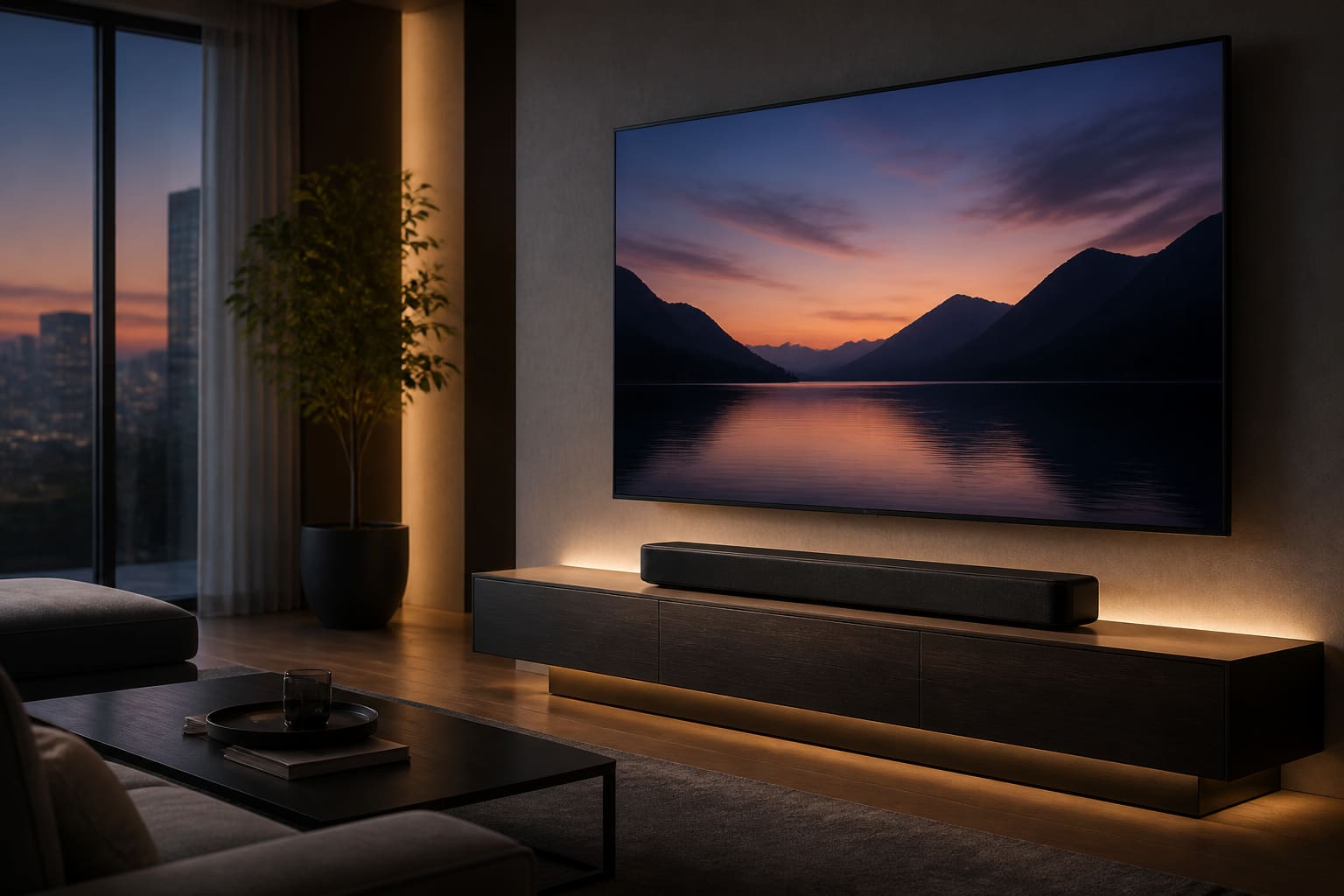
Soundbars exist because most people will not drill holes for ceiling speakers. They also exist because TV chassis got thinner and drivers got worse as panels got prettier. In 2026 the category splits cleanly: compact 2.0 or 2.1 bars that fix dialogue and add modest bass; mid-range 3.1 systems with dedicated centre channels; and flagship Atmos kits with wireless subwoofers and rear satellites that approximate cinema immersion in a rental-friendly package.
We tested bars in three real rooms — a 12-square-metre London flat, a standard Victorian terrace living room and a open-plan kitchen-diner with glass doors that reflect sound like a squash court. Every pick below survived at least a week of Netflix, Premier League and the ultimate torture test: a BBC drama where whispered exposition meets sudden orchestral stings.
Best overall: Sonos Arc Ultra
Sonos’s Arc Ultra replaces the original Arc with more drivers, cleaner height processing and Trueplay tuning that adapts to room geometry using your phone microphone. Dolby Atmos over HDMI eARC is rock-solid; stereo music playback is good enough that I paused the TV and listened to an album without embarrassment. The Sonos app remains the least infuriating multi-room controller on the market — which matters when you add Ones as rear surrounds later.
At around £899 for the bar alone — more with Sub and rear speakers — it is not cheap. It is, however, the best single-box upgrade for people who want Atmos, music streaming and sane setup in one afternoon. Rival flagships beat it on raw cinema slam; none beat it on living-with-it ease.
Best for small flats: Bose TV Speaker
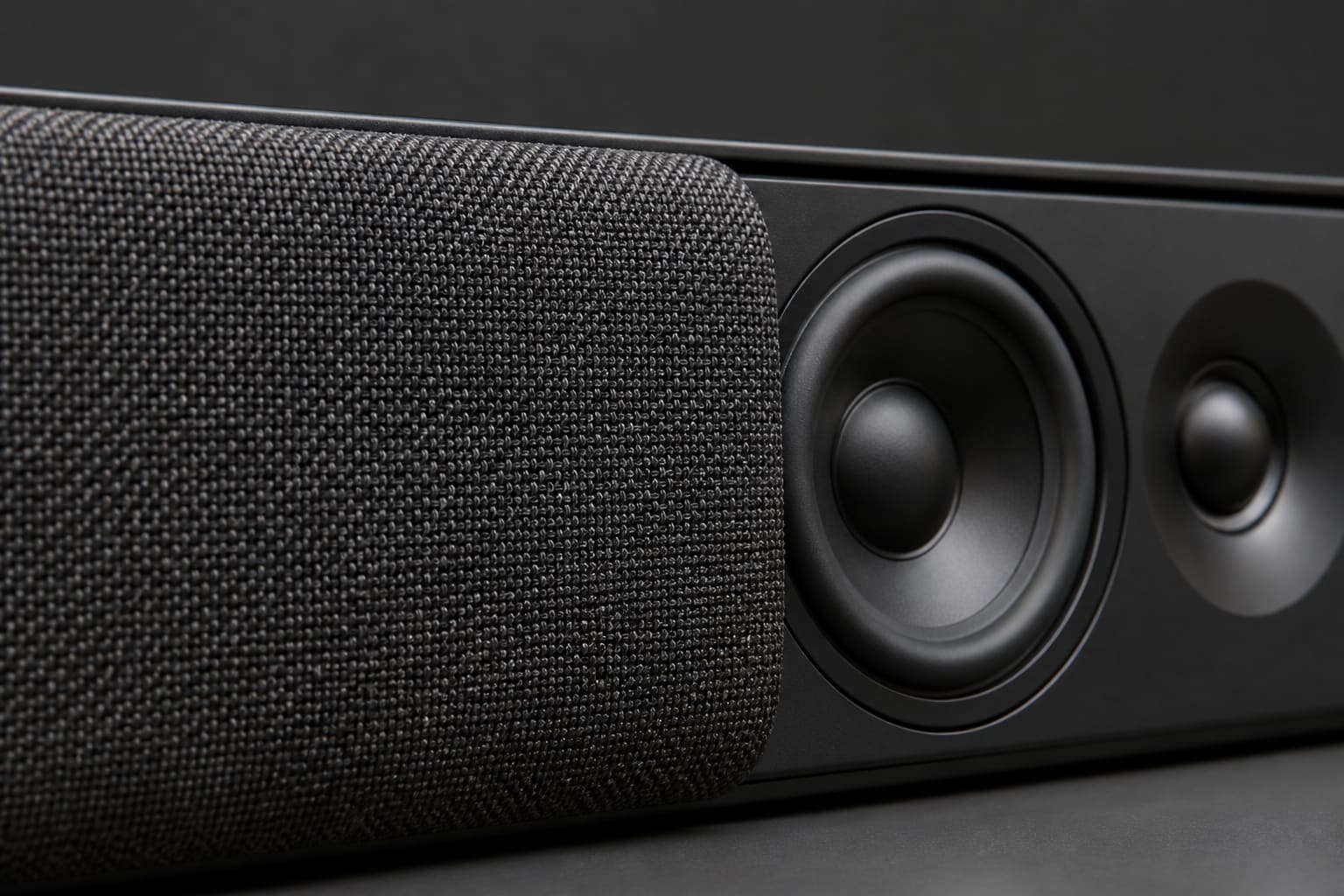
Not everyone needs Atmos. The Bose TV Speaker is a compact 2.0 bar that sits beneath a 43-inch set without dominating a shelf. Dialogue mode actually works — crisp consonants without sibilance fatigue — and Bluetooth pairing is painless for podcasts from your phone. There is no HDMI passthrough; you connect optical or HDMI ARC depending on your TV’s age.
At roughly £199 it is the recommendation for bedroom TVs, kitchen sets and students who refuse to live with laptop speakers. Bass is polite, not cinematic. That is the trade for size and price.
“A soundbar’s first job is intelligibility — explosions are optional until you can hear what the characters are saying.”
— What Hi-Fi?, soundbar testing methodology and buyer guidance
Best Atmos on a budget: Samsung HW-Q800F
Samsung’s mid-tier Atmos bars punch above their price when paired with Samsung TVs — Q-Symphony lets TV and bar drivers cooperate instead of fighting. The HW-Q800F includes a wireless sub and up-firing drivers for height channels. Atmos effects are not ceiling-speaker convincing, but helicopter passes in test clips had clear directionality. HDMI eARC, one remote volume sync and a compact sub that fits beside a sofa leg seal the deal.
Street price hovers around £649 with frequent bundle discounts during TV sale seasons. Music playback is acceptable for parties, not audiophile listening. For film-first buyers in medium rooms, the maths works.
Best for music and movies: Sony HT-A9000
Sony’s flagship bar targets people who refuse to choose between vinyl Friday and blockbuster Saturday. Twelve drivers, front and side radiators, optional SA-RS5 rear speakers and an SW5 sub create a wide, tall stage when fed Atmos or Sony’s 360 Spatial Audio Mapping. Stereo PCM through the bar sounds detailed and unforced — rare in a category that treats music as an afterthought.
Setup is more complex than Sonos. The reward is scale in larger rooms where compact bars sound thin. Budget £1,400+ for a full surround kit. If you already own Sony headphones and Bravia TVs, integration sweetens further.
Buying checklist: HDMI, eARC and placement
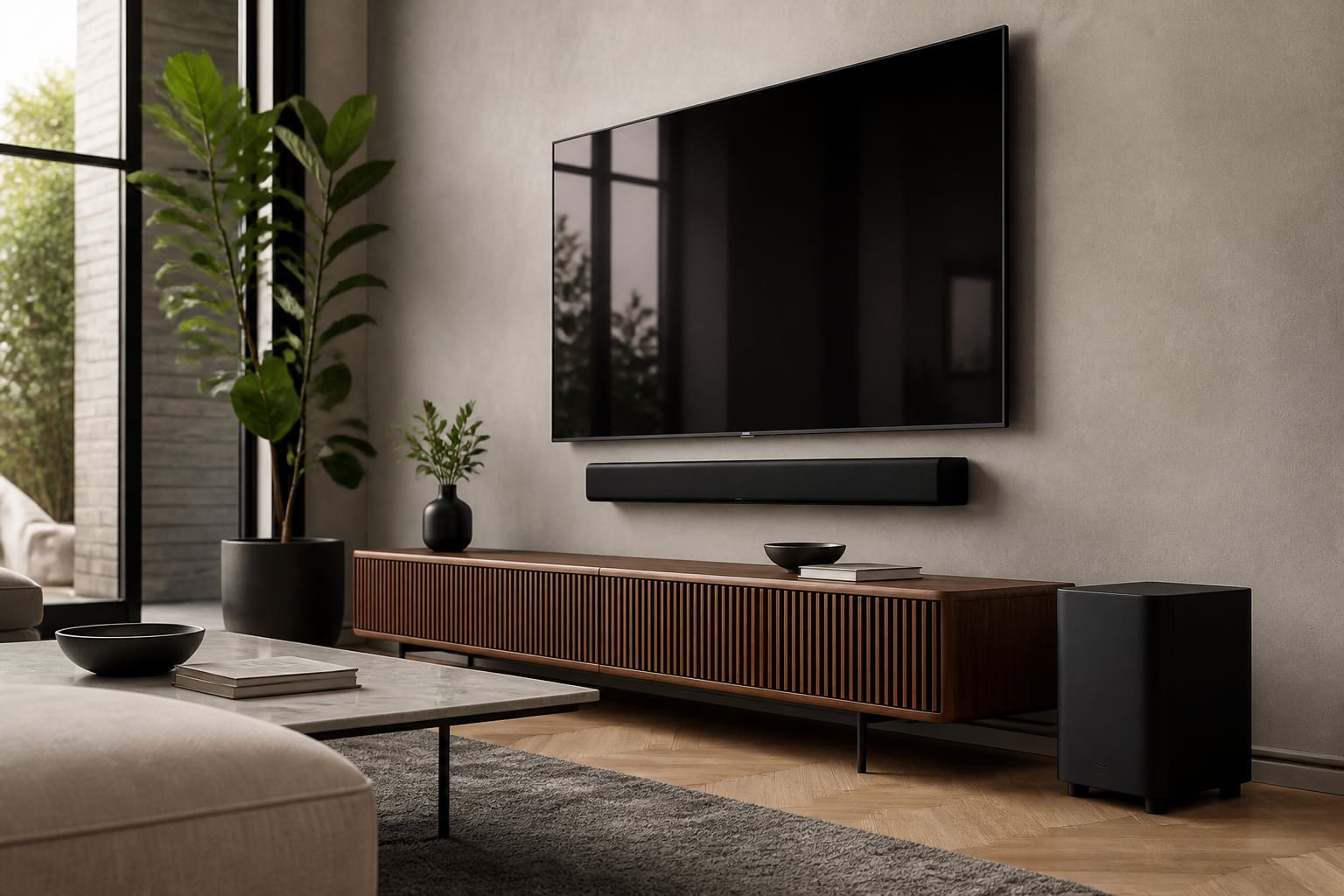
Insist on HDMI eARC if your TV supports it — one cable carries Atmos from built-in apps without optical compression limits. If your TV is older, verify optical passthrough and whether your chosen bar downmixes Atmos gracefully. Wall-mount the bar at ear height when seated; firing upward into a vaulted ceiling behaves differently than a flat 2.4-metre ceiling in a flat.
Subwoofer placement beats spec sheets: corner loading adds boom; mid-room placement tightens punch. Neighbours in flats should enable night mode and consider rubber feet under subs. Friendship retains value.
How we test soundbars
We level-match bars at 75 dB at the primary seat, run dialogue-heavy clips, Atmos demo material and a stereo album side-by-side. Latency over eARC is checked for lip sync. We note app quality, firmware update frequency and whether surround expansion kits are worth the extra cost or feel like upsell traps. UK prices at publication guide our rankings; sale events can shuffle value — the Q800F during Black Friday is a different proposition at £499.
Verdict
Pros
- Clear picks from £199 to flagship Atmos
- Tested in real UK living rooms, not showrooms
- HDMI eARC and placement guidance included
Cons
- Full Atmos kits remain expensive
- Compact bars cannot replace true surround
- Neighbour-friendly bass requires careful sub placement
Sources
- Sony, HT-A9000 soundbar specifications — sony.com
- Bose, TV Speaker product details — bose.com
- What Hi-Fi?, soundbar reviews and buying advice — whathifi.com