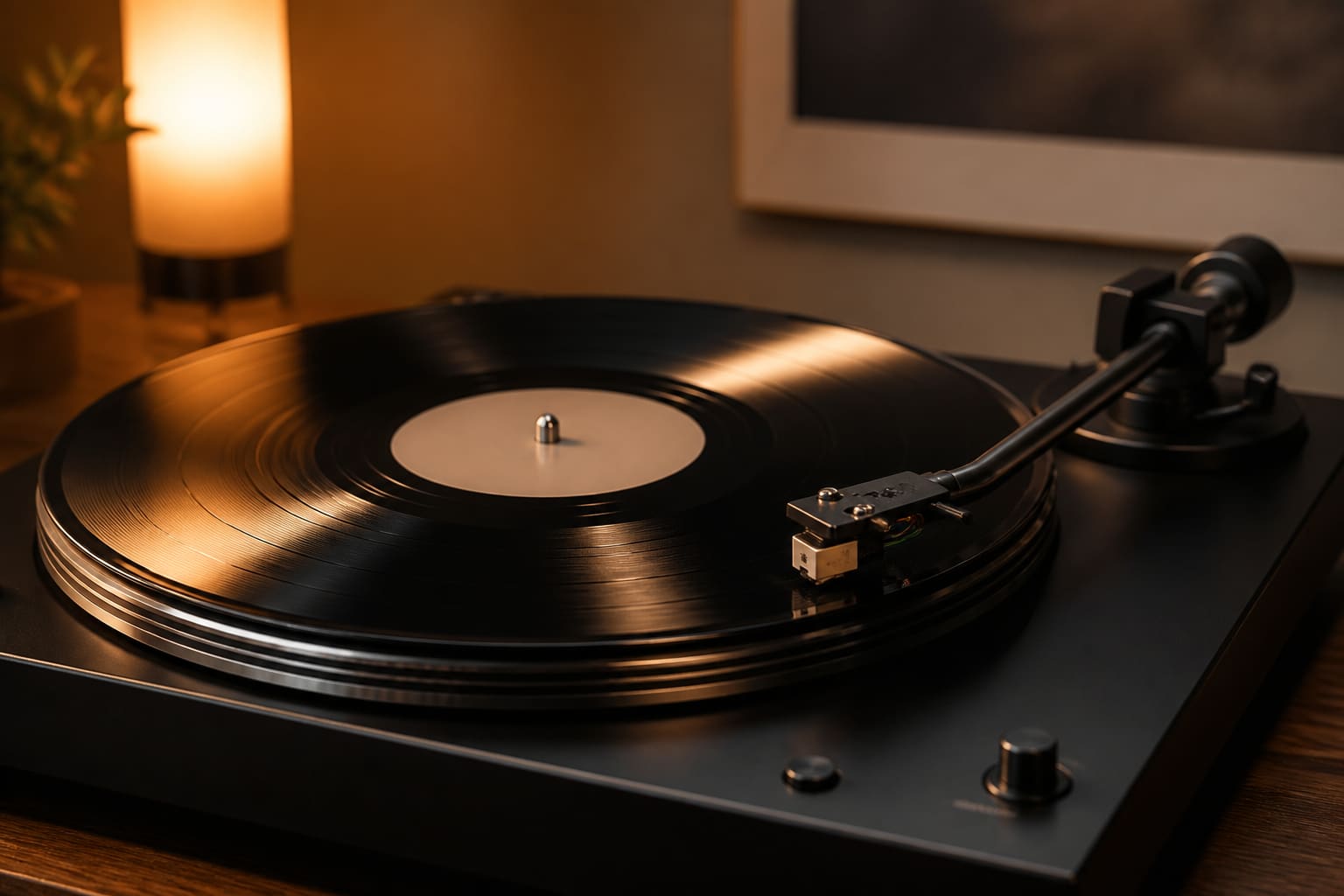
Every year someone declares vinyl a fad. Every year the sales figures disagree. In 2025 UK vinyl revenues crossed another threshold according to BPI and RIAA-aligned industry data — not because teenagers discovered grooves, but because thirty-somethings with disposable income wanted artefacts: large artwork, liner notes, a ritual that cannot be skipped with a swipe. Vinyl is not replacing streaming. It is complementing it the way a proper coffee complements an instant sachet — same category, different intention.
I spoke with independent shop owners in Shoreditch and Glasgow, toured a boutique pressing plant in Hertfordshire, and lived with three turntable setups at different price points for a month. The technology behind the revival is more interesting than the aesthetic Instagram posts suggest. Modern direct-drive motors, carbon tonearms and phono preamps with sub-millivolt noise floors make entry easier than the scratchy second-hand decks of the 2000s nostalgia wave.
Why vinyl keeps growing
Scarcity and ceremony drive part of the boom. Limited coloured pressings sell out in minutes. Artists monetise super-fans who already pay for streaming. Record Store Day still queues around the block for reissues that streaming libraries already host — which proves ownership matters as much as access. Vinyl also benefits from the same fatigue that fuels streaming rotation: when every album is one click away, putting a needle down feels like a decision.
Sound quality is the most argued reason and the least universal. Vinyl can sound wonderful through a balanced chain — turntable, phono stage, amplifier, speakers — but it is not inherently superior to lossless digital. Warmth is often euphonic colour, not accuracy. Buy vinyl for the experience; tune your system if you also want fidelity.
The supply chain: pressing plants and quality control
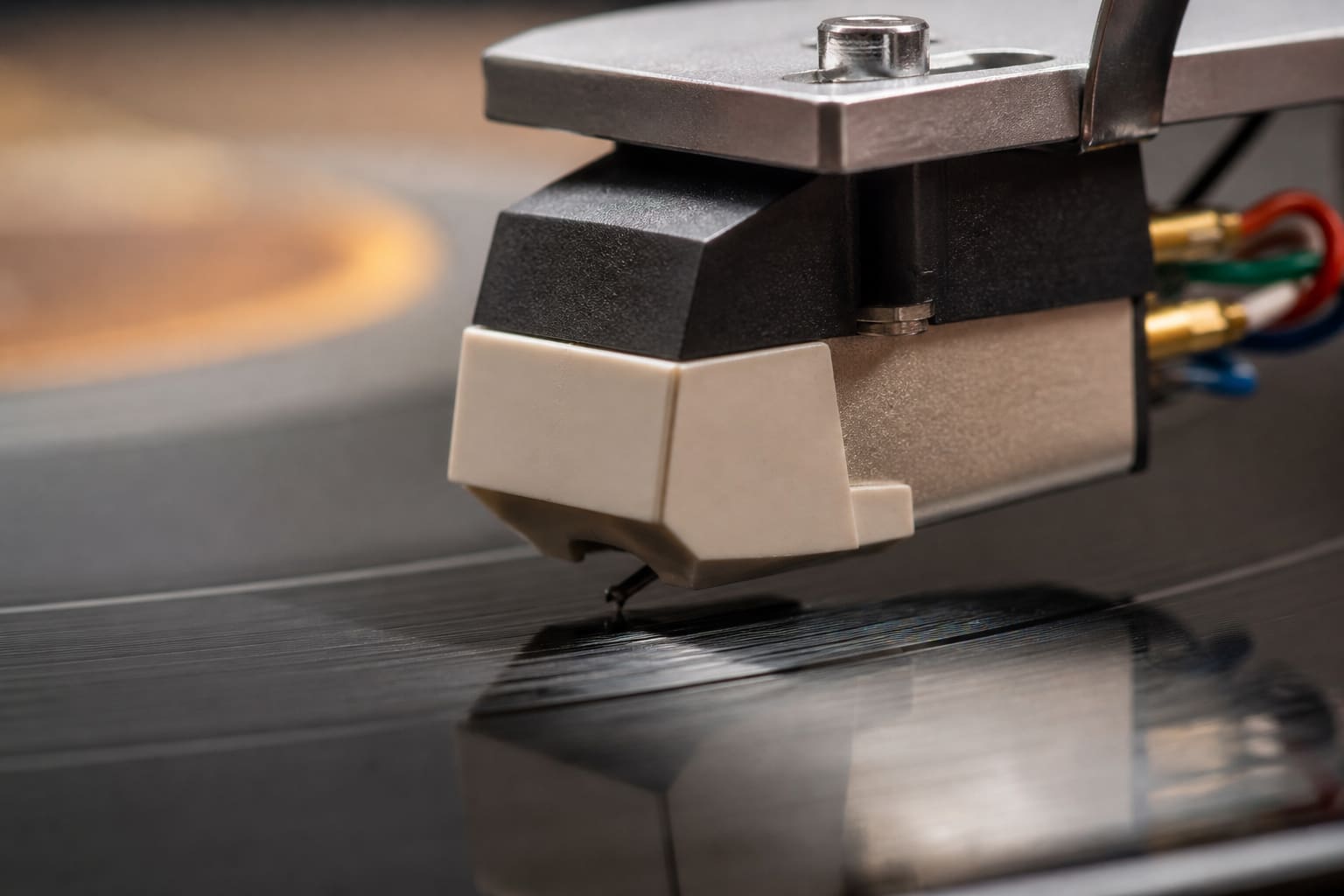
Demand outstripped pressing capacity for years after the mid-2010s revival. New plants opened; older ones expanded. Quality remains inconsistent. Warped records, off-centre labels and surface noise on brand-new pressings still appear — especially on rushed reissue campaigns. Boutique plants charge more but inspect platters manually. Major label runs optimise for volume. Check return policies at indies; they expect imperfect discs and handle exchanges without drama.
Half-speed mastering and all-analogue chains are marketing terms with real engineering behind them when done properly. They do not guarantee your copy sounds better than a hi-res stream — mastering choices and your playback chain matter more — but well-executed reissues of classic albums can surprise sceptics who expected a gimmick.
“Vinyl’s resurgence is as much about culture and collecting as it is about waveform fidelity — and the industry has learned to serve both.”
— RIAA, annual music industry revenue and format trend reports
Turntables in 2026: what actually improved
Entry decks like the Audio-Technica AT-LP60X and Pro-Ject T1 EVO ship with factory-set tracking force and built-in phono stages — plug into powered speakers and you are spinning within twenty minutes. Mid-range belt-drive tables from Rega and Pro-Ject add upgrade paths: better cartridges, external phono preamps, isolation feet that tame urban flat vibrations. Flagship direct-drive units from Technics target DJs and audiophiles who want torque and pitch stability for listening and mixing.
USB outputs blur analogue and digital worlds. Rip records to FLAC for phone listening without guilt — you bought the artefact and preserved a backup. Software bundled with USB decks is still mostly mediocre; Audacity or dedicated rippers with click removal produce cleaner files. Expect ripping to take real time plus editing — it is a hobby within a hobby.
Building a sensible first system
Start with the turntable, then the phono stage if your amp lacks one, then speakers. Skimping on speakers while overspending on a deck is the classic mistake — you will hear the weakest link. A £300 table into a £400 pair of powered monitors beats a £700 table into laptop speakers every time. Ground hum in UK flats is real; keep cables tidy, separate power strips for digital gear and analogue chain where possible, and verify earth loops before buying expensive isolation platforms.
Used markets remain viable for amplifiers and speakers; turntable bearings and belts need inspection. Local hi-fi shops still demo combinations — support them if you want to hear before you buy. Online forums are useful for pricing; they are terrible for calming upgrade anxiety.
Streaming and vinyl as partners
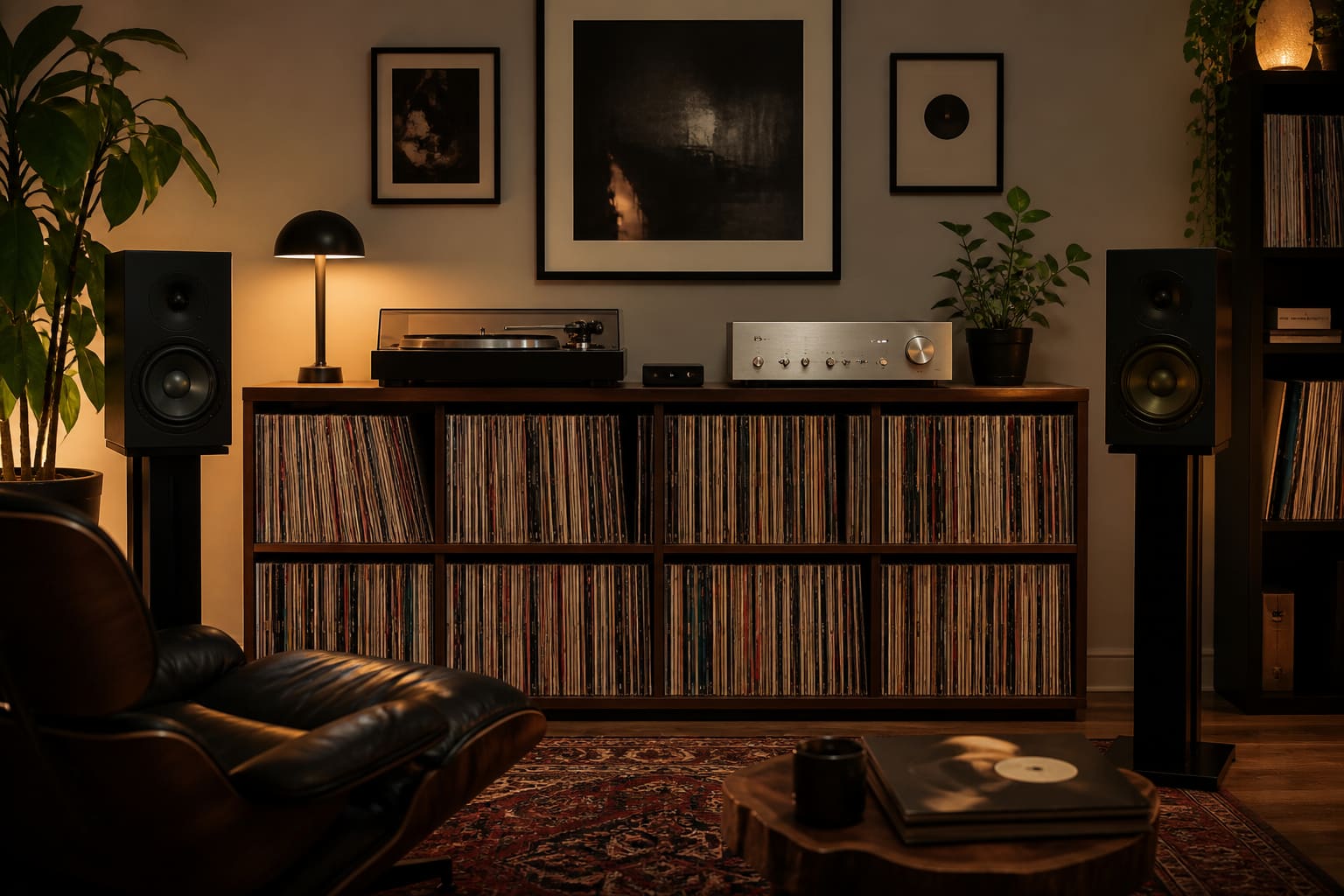
The modern listener uses both. Discover on Spotify or Apple Music; buy the album you will replay for years on vinyl. Smart speakers in the kitchen, turntable in the living room — no contradiction. Some artists delay vinyl releases to protect launch windows; patience is part of the format. When a deluxe box set includes a download card, rip it and file it next to your streaming library metadata so you are not hunting later.
Vinyl will not suit everyone. It requires space, care and tolerance for occasional pops. For those who want music to slow down time rather than fill silence, the revival offers better tools than at any point since the format’s first decline. The tech caught up. The ritual was always there.
Where to start shopping
Visit a local record shop before impulse-buying online exclusives. Demo turntables where possible. Budget for a brush, inner sleeves and a mat upgrade before chasing rare pressings. Read discogs seller ratings religiously. And accept that your first setup will not be your last — the hobby escalates gently, then suddenly you own a separate amplifier for Wednesday evenings.
Sources
- RIAA, US recorded music industry revenue statistics and format trends — riaa.com
- Audio-Technica, turntable and cartridge product specifications — audio-technica.com
- What Hi-Fi?, turntable reviews and vinyl system buying guides — whathifi.com