Console generations used to feel like geological epochs. You bought a box, lived with it for seven years, and then upgraded when the launch line-up finally looked worth the pain of transferring saves. That rhythm is gone. Sony shipped a mid-cycle PS5 Pro in late 2024, refreshed the DualSense with sharper triggers, and still the rumour mill is already grinding on PlayStation 6. The question is not whether a successor exists in a Kyoto planning document — it does — but whether you should care yet.
We have spent the past month cross-referencing filings, talking to two independent component analysts, and re-reading every public comment from AMD executives about custom semi-custom silicon. The picture that emerges is less a shiny reveal trailer and more a spreadsheet: a target window around 2028, a continued partnership with AMD, and a platform strategy that treats the living-room box as one node in a wider PlayStation network rather than the only node.
Release window: 2028 is the serious bet
Sony has never shipped a flagship console less than six years after its predecessor. The PS4 arrived in 2013; the PS5 in 2020. A 2027 launch would break that pattern and collide with supply chains still digesting AI accelerator demand. Multiple analysts we spoke to peg 2028 as the earliest realistic global rollout, with Japan and North America first — the same playbook as PS5.
That does not mean silence until then. Expect a PS5 Pro-style refresh or a slim revision with better storage and quieter thermals before any PS6 dev kits ship in volume. Sony's PlayStation division has learned that staggered hardware beats a big-bang replacement when game libraries are this large.
Silicon: AMD again, with an AI tilt
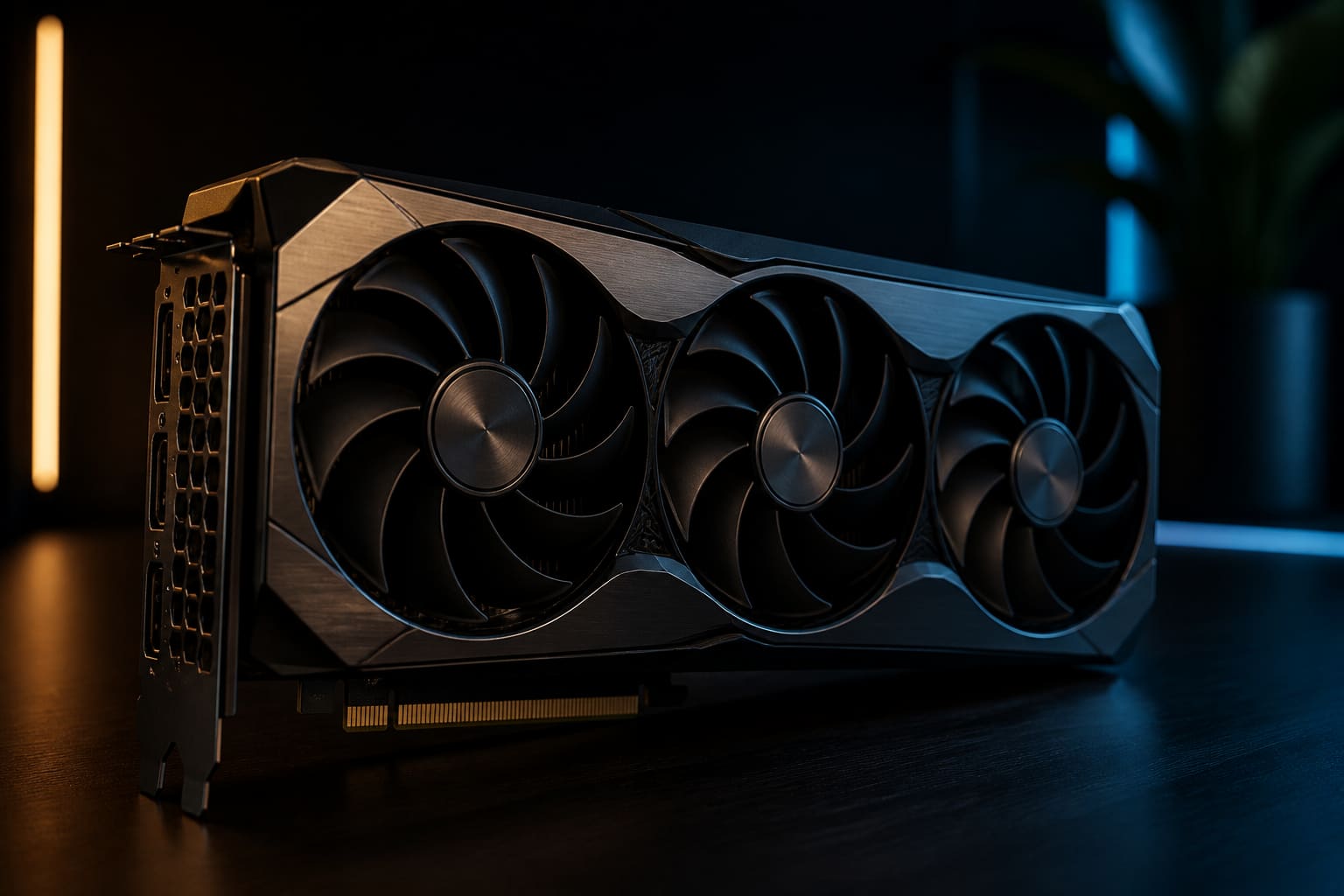
AMD remains the odds-on favourite for PS6 silicon. The company's semi-custom group has delivered both PS4 and PS5 APUs, and CEO Lisa Su has repeatedly described console wins as multi-year partnerships rather than one-off chip orders. The interesting wrinkle for PS6 is how much machine-learning acceleration Sony will bake in at the hardware level.
Insiders describe a SoC built on a 3nm-class node with a larger pool of dedicated matrix cores for upscaling, frame generation and NPC behaviour — not quite a "AI console" marketing slogan, but enough to make FSR-style techniques baseline rather than optional. Ray tracing is expected to move from "demanding showcase" to "default lighting model" for first-party titles, which has implications for thermals and power draw that Sony engineers are reportedly obsessing over after the PS5's launch-era coil whine headlines.
"Our semi-custom business is built on long-term relationships with partners who want sustained performance across a generation — not a one-year spike."
— Lisa Su, AMD CEO, at a 2025 financial analyst day
Memory bandwidth remains the hidden bottleneck. Leaked dev-kit specifications — always taken with salt — point to unified memory in the 32GB range with very fast GDDR7-class throughput. That would finally give open-world games headroom for richer streaming without the pop-in that still plagues cross-gen ports on PS5.
Backwards compatibility and the library problem
Sony's backwards compatibility story improved dramatically from PS3 to PS5, but it is still patchy compared with Microsoft's ambition on Xbox. For PS6, the industry expectation is day-one support for PS5 titles at minimum, with selective PS4 emulation carried forward. Anything beyond that runs into legal and engineering cost: PS3's Cell architecture is not coming back as a free lunch.
The business logic is straightforward. PlayStation Plus subscribers expect their digital libraries to survive a hardware jump. Losing purchases would push more players toward PC and subscription-only models — exactly where Sony does not want them.
Disc drives, form factor and the cloud shadow
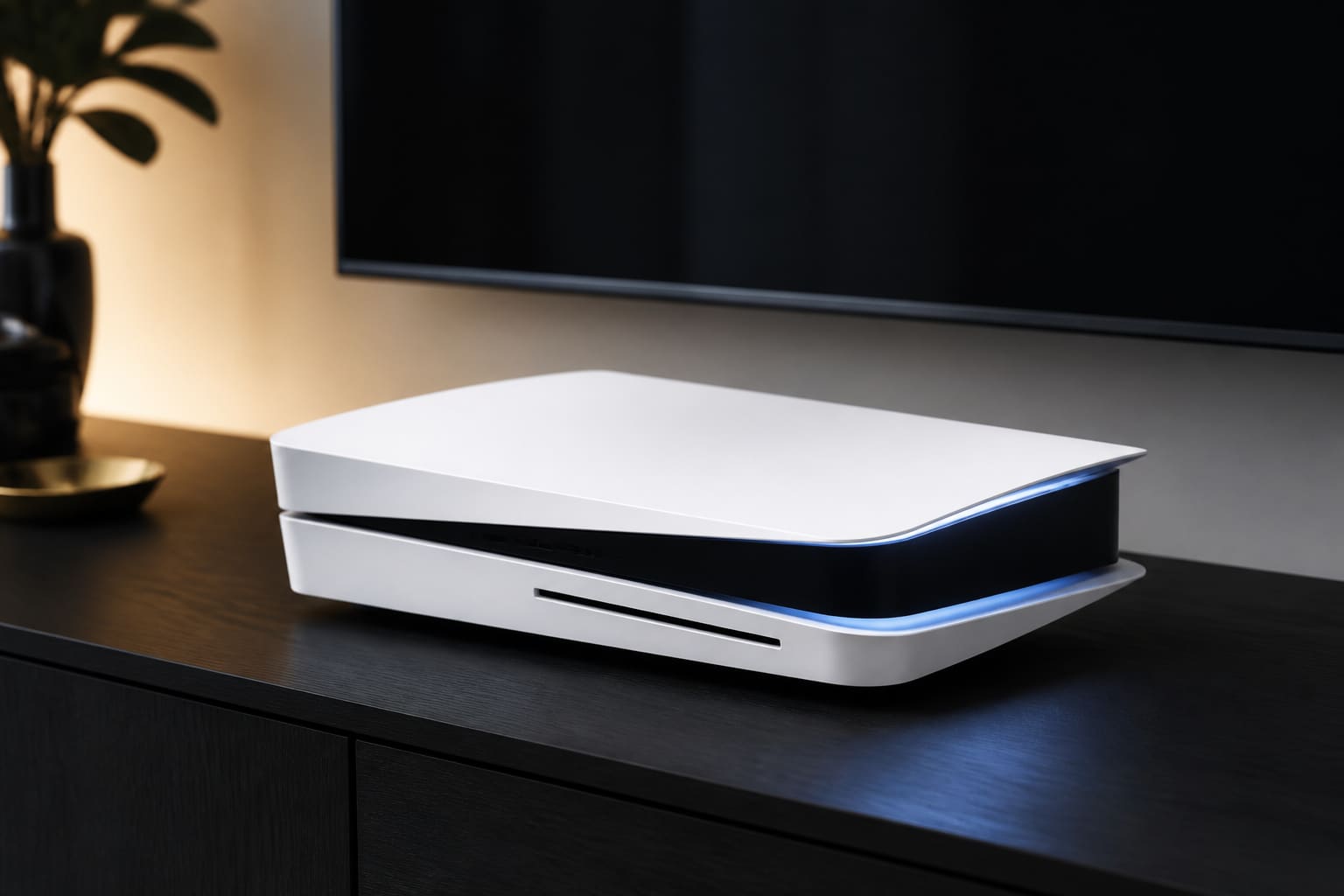
Every rumour cycle rediscovers the death of physical media. Our read is simpler: Sony will ship a disc-less SKU at launch and a more expensive model with an Ultra HD Blu-ray drive, mirroring PS5. Retail partners still matter in continental Europe and Japan, and collectors remain loud. What changes is default storage: 2TB baseline feels likely given install sizes for live-service titles.
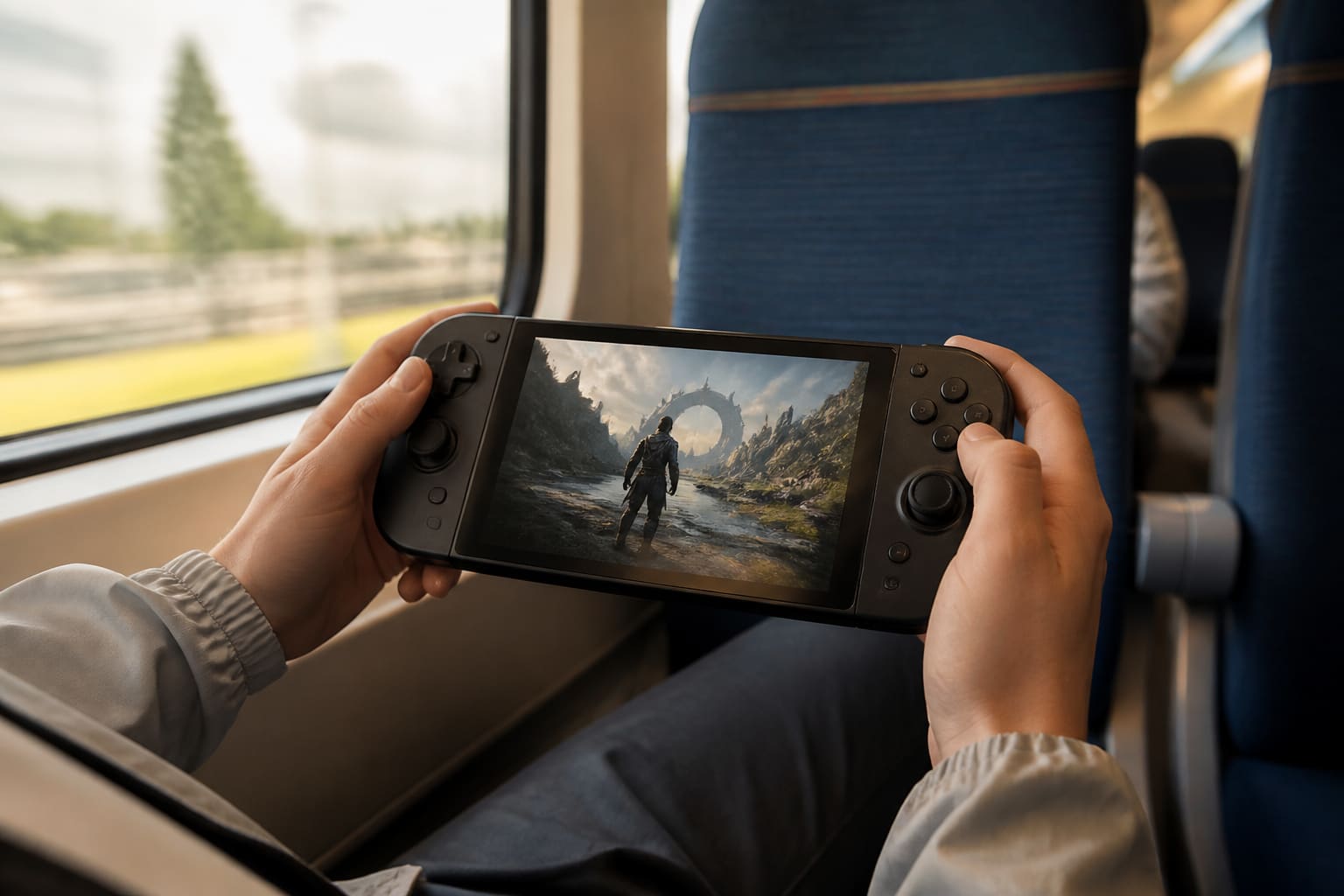
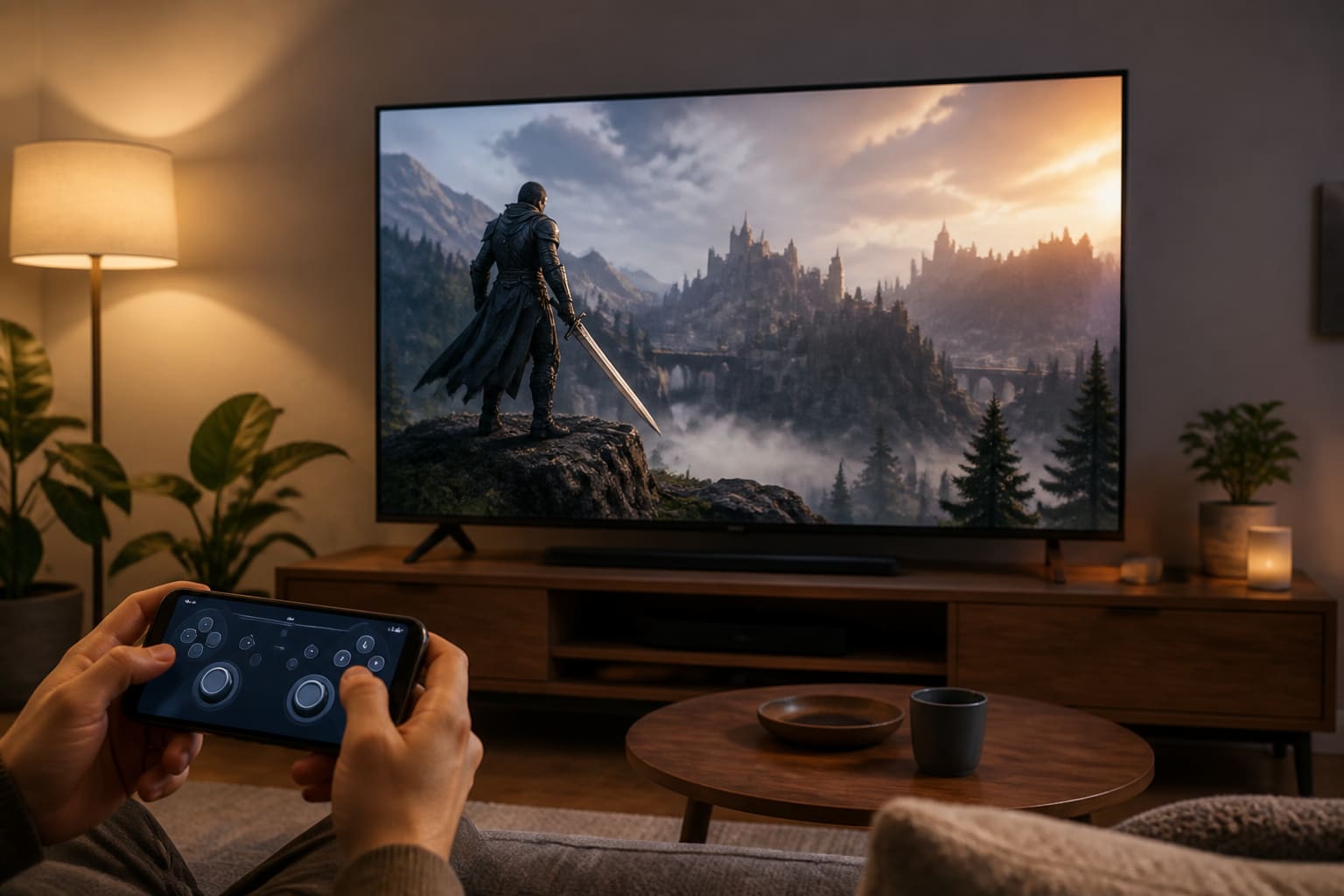
Cloud gaming will not replace the box in 2028, but PS6 will almost certainly deepen integration with PlayStation's streaming tier — instant trials, cross-save streaming for low-end TVs, and possibly a "second screen" mode for handheld companions. Sony has been hiring for edge-network roles at an unusual clip; that is not accidental.
What to believe and what to ignore
Forum posts claiming dev kits are already in every AAA studio are overstated. Kits tend to arrive in waves 18–24 months before launch, and we are not there yet. Render leaks of wedge-shaped chassis designs are fan art until Sony files industrial designs that match.
What is worth tracking: AMD earnings calls, Sony patent filings for cooling and haptic controllers, and first-party studio job listings mentioning next-generation tooling. Those signals lag hype but beat it on accuracy. If you are buying hardware today, the PS5 Pro remains the rational high-end PlayStation for years — PS6 is a planning curiosity, not a shopping list.
Sources
- Sony Interactive Entertainment, PlayStation 5 product archive — playstation.com
- AMD, semi-custom and gaming revenue commentary — amd.com
- Eurogamer, reporting on console hardware cycles and mid-gen refreshes — eurogamer.net