The GPU market in 2026 is two markets wearing one nameplate. On one side, PC gamers want affordable cards that run Path Tracing without sounding like a hoover. On the other, cloud providers and enterprise AI labs will pay almost anything for accelerators that never touch a PCIe slot in a gaming rig. Nvidia sits at the centre of both stories; AMD is chasing with improved gaming value; Intel is trying to prove it belongs after a rocky Arc debut. Understanding where we are means accepting that supply, not demand, still sets the price you pay on Scan or Overclockers.
We tracked UK street prices for six weeks, spoke to two system integrators, and compared launch MSRPs against what shoppers actually checkout with. The picture is better than the RTX 30-era crypto nightmare, but worse than the brief 2024 window when mid-range cards sat near list price. AI allocation pressure is real; so is a generation of games that assume upscaling is always on.
Nvidia RTX 50-series: performance up, patience required
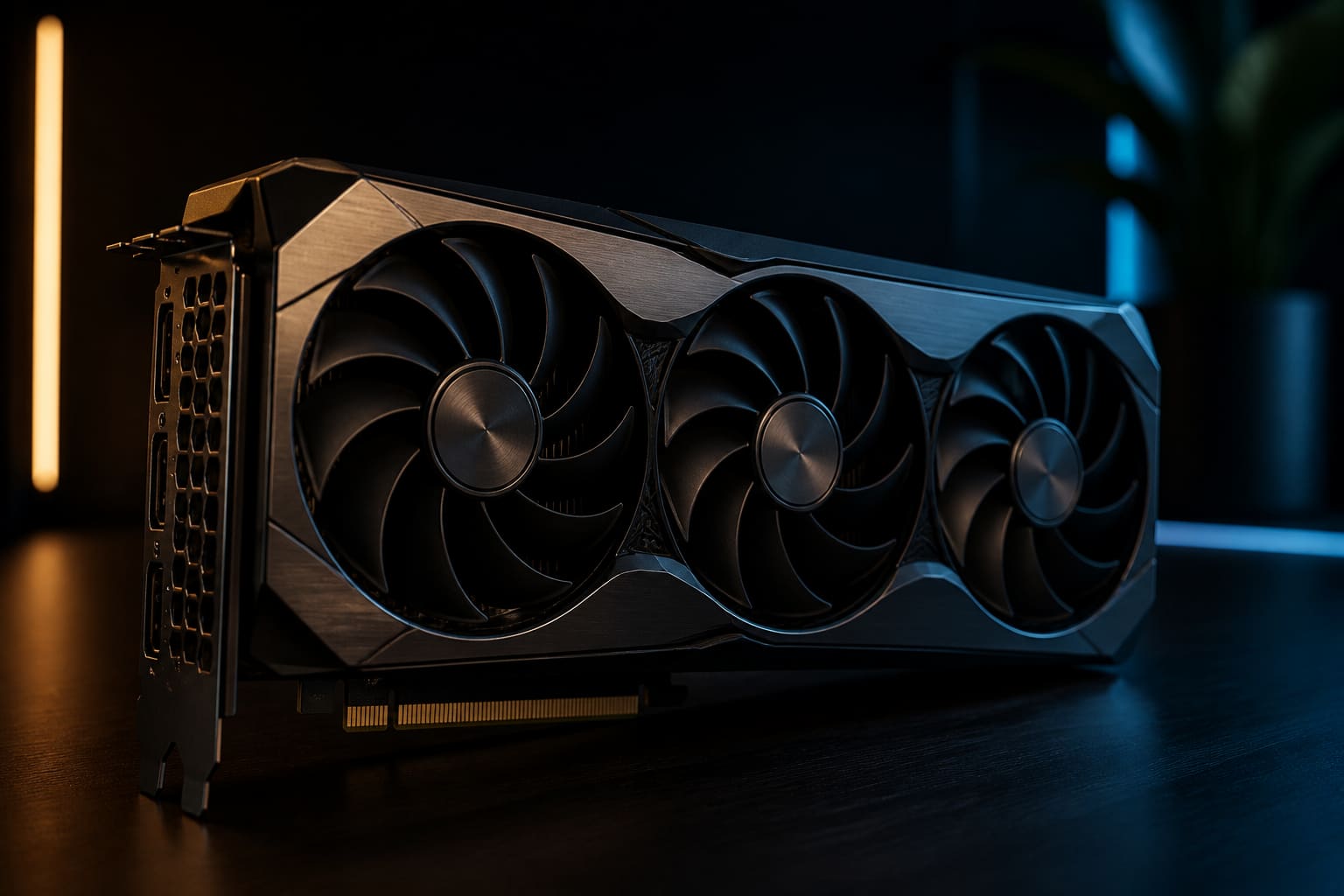
GeForce RTX 5080 and 5090 launches delivered the generational leap Nvidia promised — better ray tracing, improved DLSS frame generation, and efficiency gains that matter in small-form-factor builds. They also delivered familiar launch-month scarcity. Founders Edition cards appeared and vanished in minutes; board partners' premium SKUs stayed in stock longer at prices that made reviewers wince.
The RTX 5070 Ti is the card most gamers actually want: 1440p ultra with headroom, sensible power draw, and DLSS that rescues poorly optimised ports. Availability improved in late January, but UK pricing still runs £50–£120 above MSRP depending on retailer. If you are upgrading from an RTX 3070 or RX 6700 XT, the uplift is tangible. From a 4070 Super, patience makes more financial sense.

AMD RDNA 4: fighting on value
AMD's Radeon RX 9070 XT launch was the most competitive move Team Red has made in years. Raster performance lands between Nvidia's xx70 and xx80 tiers; ray tracing improved but still trails RTX in the cruel comparison tests. Where AMD wins is explicit pricing — MSRP held longer in the UK than equivalent GeForce models — and 16GB VRAM on key SKUs, which matters for modded games and local AI experimentation.
FSR 4 frame generation closed much of the gap with DLSS in our side-by-side tests, though image stability varies title by title. Driver maturity has been surprisingly smooth at launch, a welcome change from past AMD stumbles. If you refuse to pay Nvidia tax and can live with slightly weaker RT, the 9070 XT is the rational 1440p choice in early 2026.
"The gaming GPU market is healthy when buyers have two credible choices at every price band — we are closer to that than we were in 2023."
— Hannah Cole, after six weeks of UK price tracking
Intel Arc Battlemage: third place is not nothing
Intel's Battlemage cards target the budget and mainstream segments Nvidia and AMD sometimes neglect. The Arc B580 competes with last-gen xx60 cards on price, with improving drivers and acceptable 1080p performance. Media encoding and AV1 support remain strengths for streamers who want one card for play and capture.
Intel is not winning benchmarks at the top end — and may not try — but it is applying pressure at £200–£280, where impulse upgrades happen. Long-term success depends on driver consistency and retail shelf space next to AMD and Nvidia; early signs are cautiously positive, not revolutionary.

AI demand and why gamers feel it
Datacentre GPUs use different dies, but they share fab capacity, memory supply and packaging lines with consumer cards. When hyperscalers absorb HBM and advanced packaging output, gaming SKUs feel the pinch in allocation — not because Nvidia forgot gamers exist, but because margin per wafer favours AI parts. AMD faces similar maths with Instinct versus Radeon.
That structural tension is not disappearing in 2026. What helps gamers is node maturity and board partners finally shipping mid-range volumes after the launch halo fades — typically eight to twelve weeks post-release if history repeats.
What to buy and what to avoid right now
If you need a card today: RX 9070 XT for value-first 1440p; RTX 5070 Ti if you prioritise ray tracing and DLSS; wait on flagship 5090 unless money is irrelevant. If you can wait until spring, watch for MSRP normalisation and bundle deals around new CPU launches — AMD's Ryzen refreshes often pair with GPU promotions.
Avoid paying double MSRP for last-gen inventory unless it is a genuine bargain. RTX 4090 stock clearing can look tempting; compare against 5080 street prices before nostalgia spends your money. And if you game at 1080p on a 144Hz monitor, previous-gen mid-range remains viable — the GPU market's problem is premium pricing, not a lack of playable hardware.
Sources
- Nvidia, GeForce RTX 50-series product specifications — nvidia.com
- AMD, Radeon RX 9000 series and RDNA 4 architecture — amd.com
- The Verge, GPU launch coverage and market analysis — theverge.com