Nintendo does not play the spec sheet game the way Sony and Microsoft do. It never has. What it does instead is ship a concept — dual screens, motion controls, portable-home hybrid — and let the software explain the hardware. The Switch did that better than any console since the Wii. With well over 140 million units sold and a library that spans five years of indies and blockbusters alike, the successor arrives with impossible shoes to fill and a fan base that will tolerate almost anything except losing handheld mode.
Officially, Nintendo has only said that a new platform will be announced and detailed within the 2025 fiscal year, which ends March 2026. Unofficially, the supply chain has been screaming for months: new dev kits, revised cartridge orders, and retail briefing documents that point to a late-2026 launch window. We have collated the most consistent leaks and stress-tested them against Nintendo's historical behaviour. The result is not a fantasy spec dump — it is a plausible picture of a console that is more powerful, still hybrid, and deeply aware that backwards compatibility sells hardware.
Form factor: bigger screen, same idea
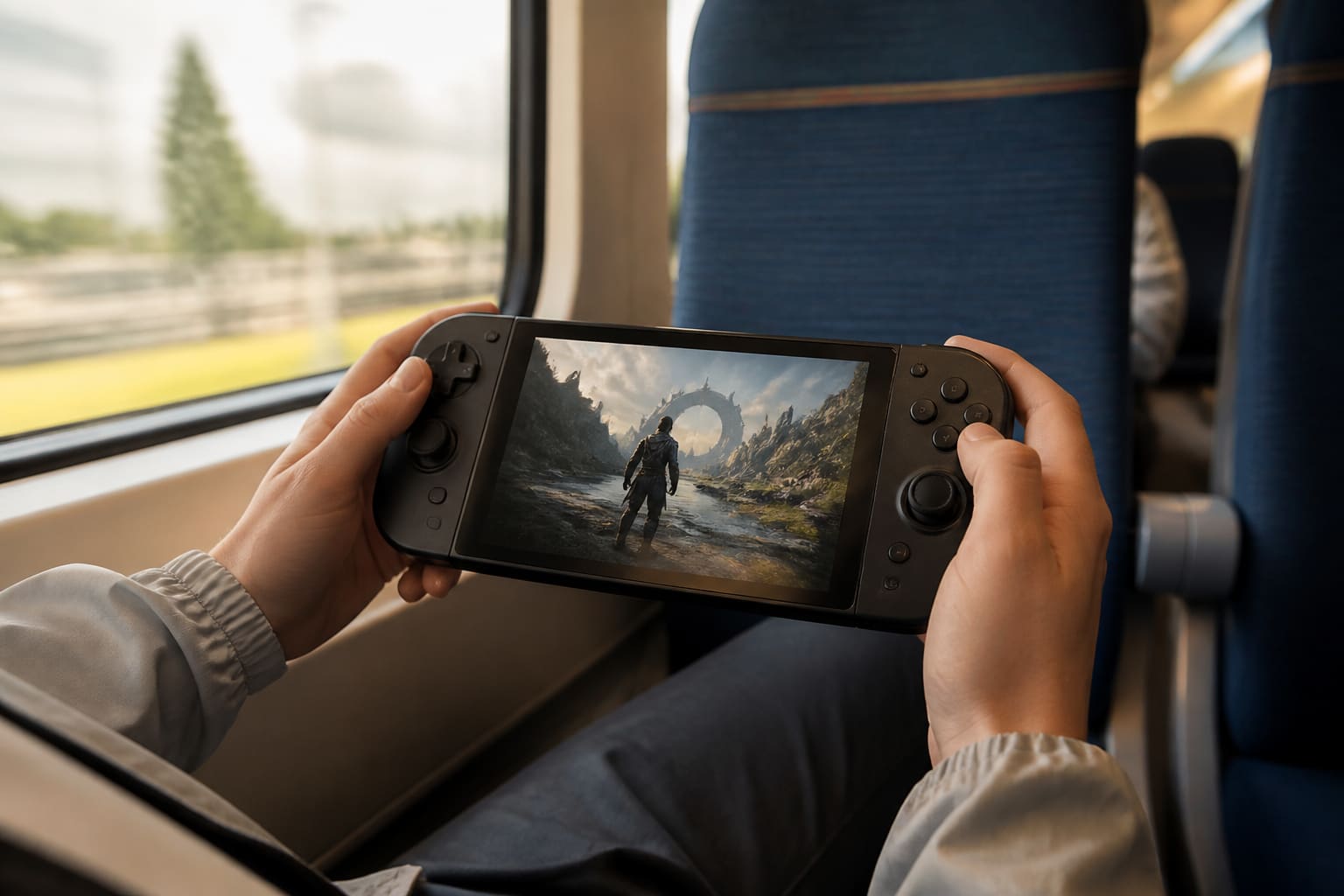
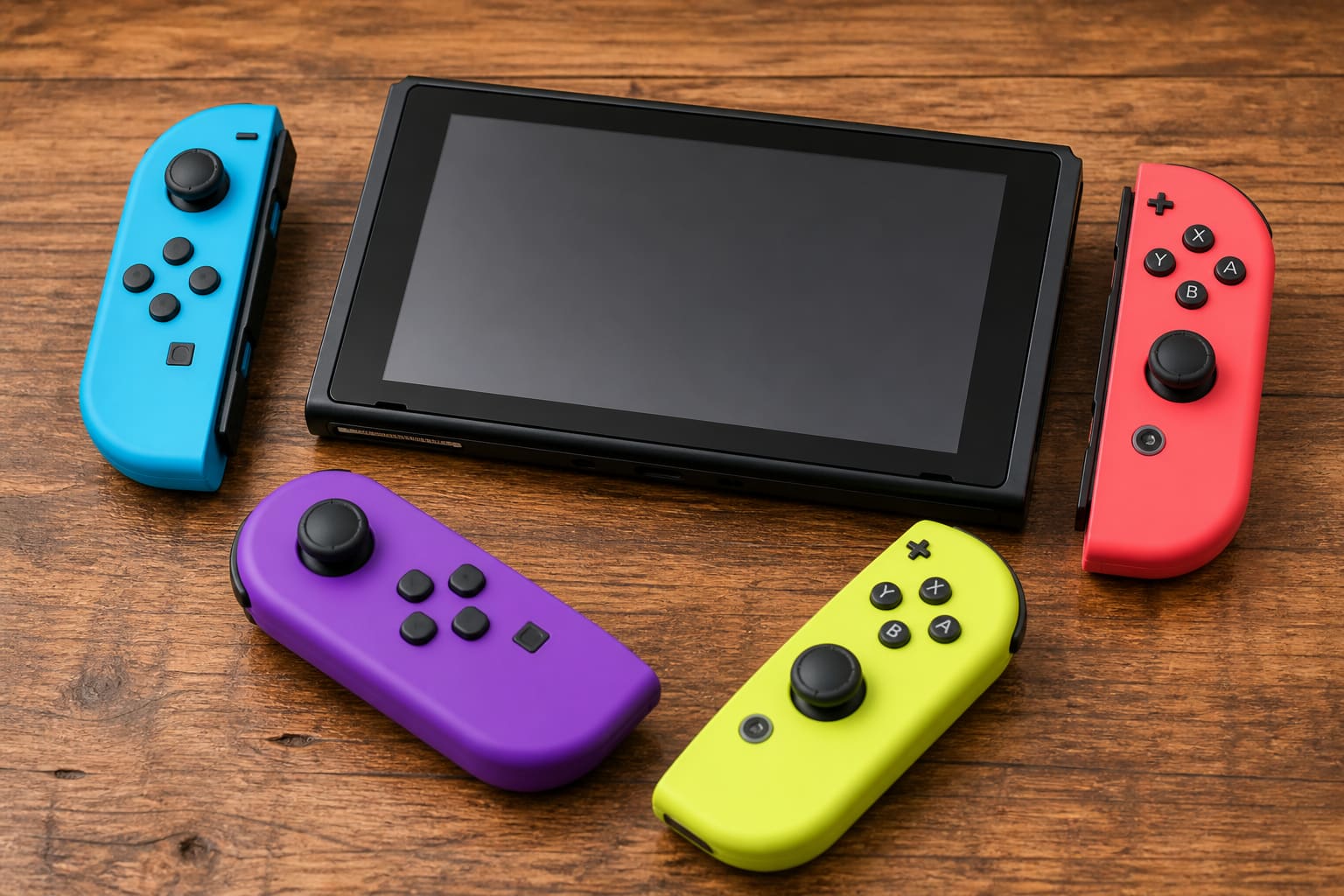
Every credible leak agrees on the fundamentals: the next machine remains a tablet-with-docks handheld hybrid. Joy-Con-style controllers attach to the sides; a dock still pushes output to the TV over HDMI. What changes is scale. A 7- to 8-inch LCD or OLED panel is widely expected, up from the Switch's 6.2-inch screen, with thinner bezels and a more rigid chassis to reduce the dreaded wobble when controllers are attached.
Nintendo learned from the Switch OLED revision that display quality matters even to players who mostly dock. The successor is rumoured to target 1080p handheld and 4K output when docked — the latter likely via upscaling rather than native rendering for most titles. That is still a massive leap from the current 720p portable baseline and would finally make text readable in strategy games and RPG menus without squinting.
Power: Nvidia's next act
The Switch runs on a customised Nvidia Tegra X1 derivative that was modest even in 2017. The successor is expected to move to a new Nvidia mobile SoC — industry chatter points to a variant built for Nintendo with Ampere- or Ada-class GPU cores and enough memory bandwidth to run modern ports at stable frame rates. Do not expect PS5 parity; do expect "Breath of the Wild at 60fps" and third-party games that no longer look like they were squeezed through a letterbox.
DLSS-style upscaling is the secret weapon here. If Nintendo and Nvidia bake frame generation or super-resolution into the platform, the box can punch above its thermal weight class without sounding like a jet engine on a train. Battery life will still be the compromise. A bigger chip and brighter screen mean either a thicker device or shorter untethered sessions. Most leaks bet on a slightly larger battery and a 2–4 hour range for demanding titles — similar to the Steam Deck, honest but not miraculous.
"Nintendo's strength has never been teraflops. It is picking the right moment to ship hardware that matches how people actually play."
— Industry analyst commentary, The Verge on Nintendo's hardware strategy
Backwards compatibility and your existing library
This is the make-or-break feature. Switch owners have spent years building digital libraries and collecting physical cartridges. Nintendo has reportedly told partners to plan for backwards compatibility at launch, though the mechanism remains unclear — full hardware emulation is expensive; selective compatibility is more Nintendo's historical style.
Our expectation: day-one support for the vast majority of Switch digital purchases via account transfer, plus physical compatibility for Switch cartridges in the new slot. Performance patches for top sellers — Mario Kart, Zelda, Splatoon — would smooth frame rates on the new silicon. Anything less would create a backlash louder than the Wii U launch.
Launch games and the software pipeline
Nintendo rarely launches without a new Mario or Zelda nearby. A Mario Kart expansion or sequel is the safest bet for day one; Metroid and Pokémon remain perennial candidates. Third-party support is the harder question. Publishers burned by the Wii U remember; the Switch won them back with sales numbers. If the successor hits its performance targets, expect continued support from Capcom, Square Enix and Ubisoft — with the caveat that cross-gen parity with PS5 and Xbox will remain out of reach.
Indies will arrive in force regardless. The Switch is the default launch platform for small studios that want physical retail exposure and a audience that actually buys games. That ecosystem does not depend on teraflops; it depends on discoverability and eShop curation, areas where Nintendo still has work to do.
Price, timing and should you wait
Launch pricing rumoured at £349–£399 feels right for the UK market — above the Switch's original £279 but below the PS5 Digital Edition's street price at launch. A holiday 2026 window aligns with Nintendo's preference for gift-season momentum and gives developers time to ship patched launch titles.
If you do not own a Switch, buying a discounted OLED model today still makes sense for the library alone. If you already have hundreds of hours in Animal Crossing and Tears of the Kingdom, waiting for the successor with compatibility is rational — unless Nintendo announces a trade-in programme, which retailers will pressure for. Either way, the hybrid era is not ending. It is getting a long-overdue engine upgrade.
Sources
- Nintendo, investor relations and hardware announcements — nintendo.com
- Nvidia, Tegra and mobile gaming silicon overview — nvidia.com
- The Verge, coverage of Nintendo Switch successor leaks — theverge.com